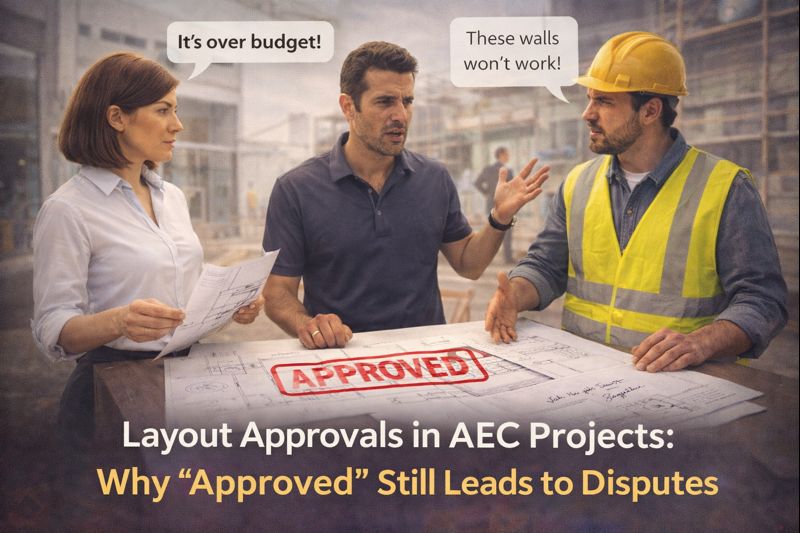
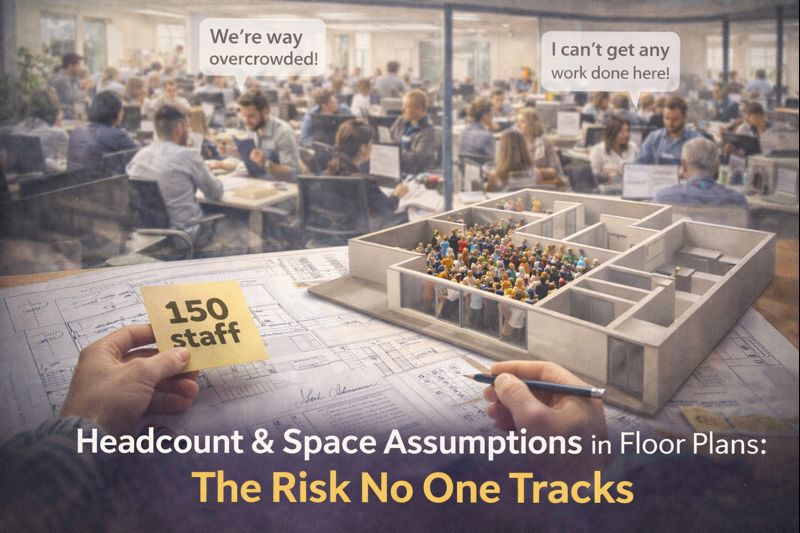
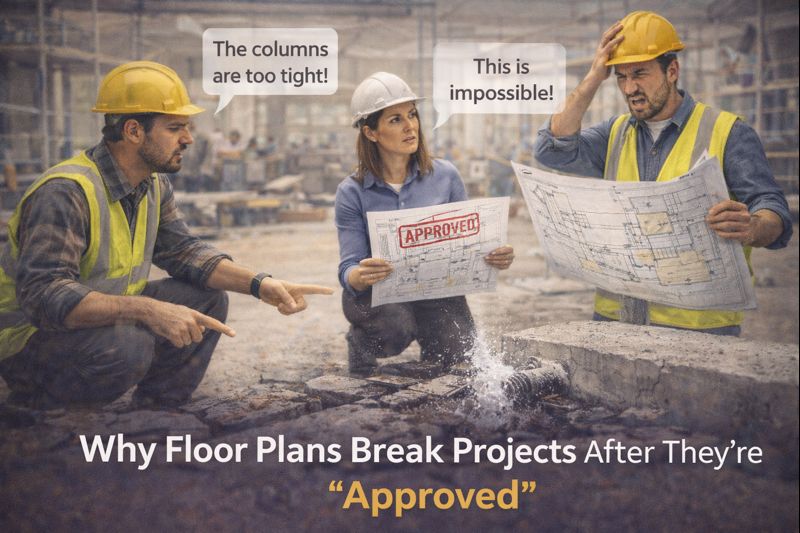
Introduction: “Use the Latest Plan” Is Not a System
In most AEC projects, layout coordination begins with a simple instruction:
“Please use the latest plan.”
It sounds reasonable.
It feels efficient.
And it’s one of the most common sources of rework.
Because “latest” doesn’t explain:
- why the plan changed
- what assumptions changed with it
- what decisions were approved
- what is still provisional
Version control without context creates false confidence. Teams move forward believing alignment exists—until coordination exposes the gaps.
Why Layout Version Confusion Happens So Often
Floor plans change frequently in early and mid stages.
Changes come from:
- client feedback
- space planning refinements
- compliance interpretation
- furniture standards
- consultant input
Each change may be valid. The problem is that most teams track files, not decisions.
When layouts circulate as PDFs, DWGs, or cloud links, context gets stripped away. The drawing survives. The reasoning doesn’t.
The Difference Between File Versions and Decision Versions
File versions answer:
- Which drawing is newer?
Decision versions answer:
- What changed and why?
- What assumptions were updated?
- What constraints were accepted?
Most coordination failures happen because teams only manage file versions.
Floor Plan CRM manages decision versions—so layout evolution is understandable, not just chronological.
How “Minor” Layout Changes Become Major Coordination Problems
A small change on plan:
- moving a wall
- resizing a room
- shifting a core edge
can trigger:
- MEP rerouting
- fire strategy updates
- furniture conflicts
- compliance rechecks
When consultants don’t know why a change happened, they make their own assumptions. That’s when misalignment begins.
Version control without intent turns coordination into guesswork.
Why Redlines and Comments Don’t Scale
Many teams rely on:
- redlines
- comment bubbles
- markups in review tools
These help temporarily—but they don’t scale.
Problems include:
- comments detached from final decisions
- conflicting markups across versions
- no clear approval record
- no single source of truth
Floor Plan CRM centralizes layout decisions so comments become inputs, not permanent confusion.
Making Version Control Useful for Consultants
Consultants don’t need every draft.
They need:
- the correct version
- clarity on what is locked vs flexible
- awareness of pending decisions
Floor Plan CRM allows teams to communicate:
- layout status
- stability level
- decision dependencies
This improves coordination quality without slowing progress.
PM Visibility: Seeing Layout Risk Before It Becomes Delay
Project managers rarely review drawings in detail.
What they need are signals.
Floor Plan CRM helps PMs see:
- frequent layout churn areas
- unresolved decision clusters
- approvals under pressure
- layouts moving too fast toward coordination
This allows intervention before consultants and contractors are impacted.
Why Version Control Protects Designers, Not Just Managers
Designers often suffer most from poor version control.
They:
- redo work unnecessarily
- defend decisions they didn’t make
- revisit resolved issues
When layout versions are tied to decisions and approvals, designers are protected by project memory, not personal recall.
From Layout Versioning to Full Delivery Control
Once layouts stabilize, they become the foundation for:
- BIM coordination
- quantity takeoffs
- procurement
- construction sequencing
If version intent disappears here, problems resurface later.
This is where platforms like Ruwaq Design extend layout decision intelligence into full AEC execution—so the “latest plan” still carries its original meaning.
Why floorplancrm.com Owns This Topic
Most content talks about drawing tools.
Very little explains why layout versions cause delivery pain.
floorplancrm.com earns authority by addressing:
- decision loss
- approval ambiguity
- coordination confusion
- rework prevention
It speaks to teams who already know the pain—but want a better way to manage it.
Conclusion: Version Control Without Context Is a Liability
Layout versioning isn’t about tracking files.
It’s about preserving intent.
When teams know not just which plan is latest, but why it looks that way, coordination improves, rework drops, and trust increases.The best teams don’t just issue plans.
They manage decisions.