Introduction: Approval Is a Moment—Not a Memory
Few words feel as final as “approved.”
Clients say it.
Teams hear it.
Projects move forward.
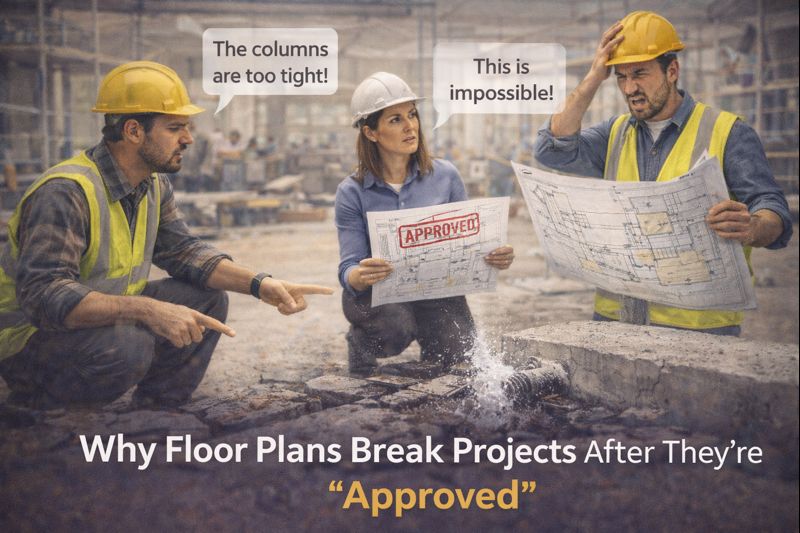
And then—weeks or months later—the same layout becomes a point of contention.
“We approved the plan, but not this outcome.”
The problem isn’t bad faith.
The problem is that approval captured consent, not context.
When approval lacks context, disputes are almost inevitable.
Why Layout Approvals Are Especially Fragile
Layout approvals happen early, often before constraints are fully understood:
- headcount may change
- furniture standards evolve
- compliance interpretations mature
- consultant inputs arrive later
Clients approve what they can see: rooms, adjacencies, circulation.
They don’t yet experience density, services congestion, or egress pressure.
Design teams approve with the expectation of refinement.
Two different meanings of “approved” quietly coexist—until coordination exposes the gap.
The Missing Ingredient: Approval Context
An approval without context answers one question:
- Did the client say yes?
An approval with context answers:
- what exactly was approved
- under which assumptions
- for which stage
- with which known risks
- what would trigger a revisit
Most disputes arise because this context was never recorded.
Floor Plan CRM exists to preserve approval intent, not just approval status.
How Disputes Form After “Approved” Layouts
Layout disputes usually follow a predictable path:
- Coordination reveals a constraint
- A layout adjustment is required
- The client resists the change
- The team references the approval
- The client references a different understanding
Both sides are correct—from their own memory.
Without documented intent, memory becomes the battleground.
Why Markups and Emails Don’t Protect You
Many teams rely on:
- marked-up plans
- email confirmations
- meeting notes
These help temporarily, but fail because:
- approvals aren’t centralized
- assumptions aren’t explicit
- versions aren’t linked
- retrieval is difficult under pressure
When tension rises, no one wants to dig through inboxes.
Floor Plan CRM centralizes approvals inside the layout record, with version, assumptions, and rationale attached.
Making Approval a Process, Not a Checkbox
Approval shouldn’t freeze design—but it should clarify what is locked and what is flexible.
Floor Plan CRM ties approvals to:
- specific layout versions
- defined assumptions (e.g., headcount, standards)
- known constraints
- stage intent (concept vs coordination-ready)
This restores meaning to approval without creating rigidity.
Why Clear Approvals Improve Client Trust
Clients don’t expect zero change.
They expect fair change.
When approvals are contextual:
- changes feel justified
- impacts are understandable
- conversations stay factual
Clients feel informed rather than surprised.
Clear approvals reduce defensiveness on both sides.
PM Advantage: Defusing Conflict Before It Escalates
Project managers often enter disputes late—when positions have hardened.
Floor Plan CRM gives PMs early visibility into:
- approvals made under unstable assumptions
- layouts advancing too quickly
- areas with pending decisions
This enables timely conversations—before disputes form.
Protecting Designers From Retrospective Blame
Designers often carry the emotional weight of disputes.
They’re asked to defend:
- decisions made months ago
- assumptions that changed
- constraints that emerged later
When approvals are documented with context, designers are protected by project memory, not personal recall.
From Approval Clarity to Delivery Confidence
Once layouts move into BIM and execution, approval intent must survive.
If delivery teams don’t know:
- what was approved
- under what conditions
- what flexibility existed
they inherit conflict instead of clarity.
This is where platforms like Ruwaq Design extend Floor Plan CRM approval intelligence into coordination and delivery—so approval intent remains visible where technical decisions intensify.
Why floorplancrm.com Owns the Approval Conversation
Most layout content focuses on design quality.
floorplancrm.com focuses on decision quality.
By addressing:
- approval ambiguity
- assumption drift
- dispute prevention
- planning-to-coordination transitions
the domain becomes a trusted authority for teams who want smoother projects—not louder arguments.
Authority is built by preventing disputes, not reacting to them.
Conclusion: Approval Without Context Is a Liability
Approvals don’t fail because clients change their minds.
They fail because intent wasn’t preserved.
When approval context is visible, changes become manageable, disputes de-escalate, and trust holds.
Floor Plan CRM doesn’t make approval heavier.
It makes it honest.
The best teams don’t avoid change.
They manage it transparently.